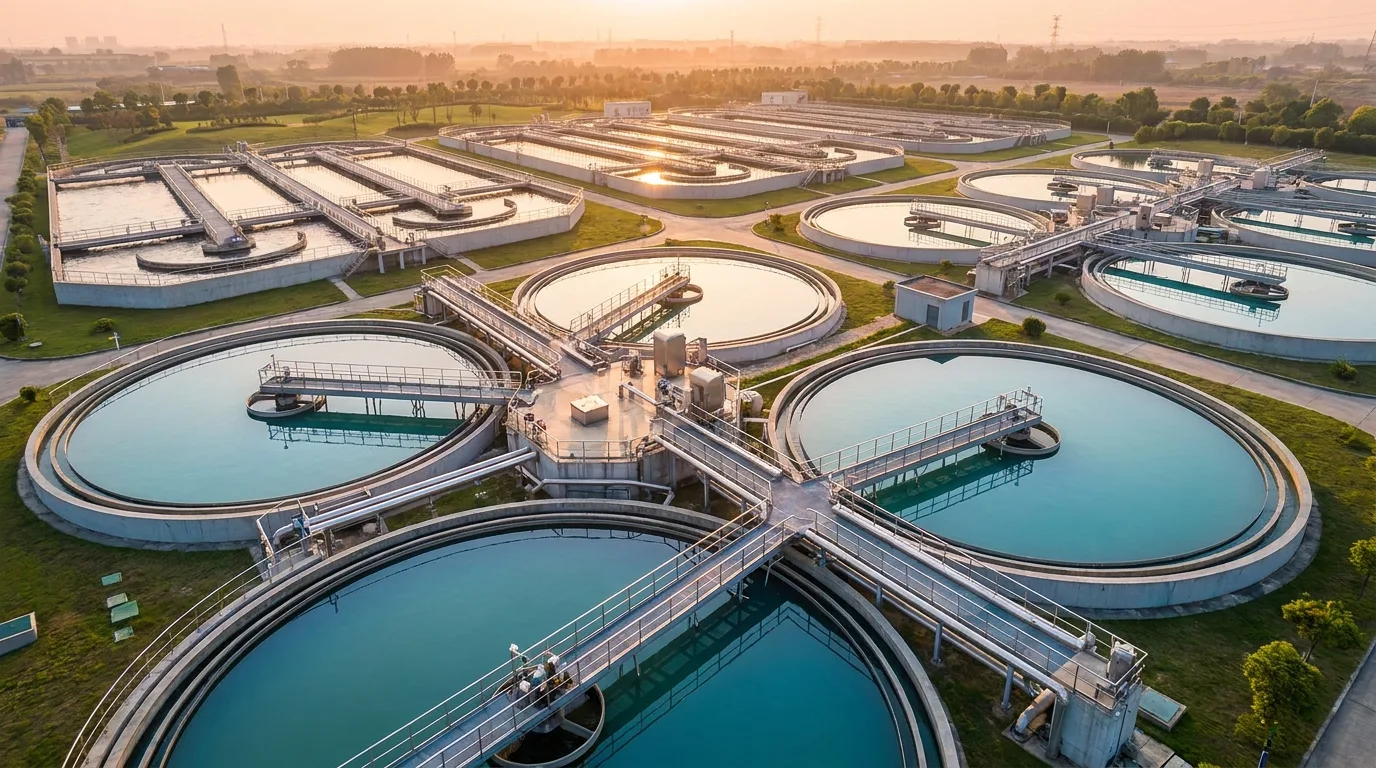
Wastewater treatment solutions that hit consent and cut the energy bill.
Meet discharge consent, phosphorus and net zero deadlines while taking cost out of treatment, on the plant you already run.
We bring the right wastewater treatment solutions together and deliver the result you are accountable for: compliant effluent, lower treatment energy and chemicals, and water recovered rather than wasted. Every result is proven at full scale before you commit.
Measured by an independent consultancy: 34% less energy to treat the load at a 110,000-population works.
In short
What are wastewater treatment solutions?
Wastewater treatment solutions are the engineered combination of physical, chemical and biological processes, across the preliminary, primary, secondary and tertiary stages, that remove contaminants from industrial or municipal wastewater so it can be discharged within consent or reused. The strongest solutions also cut the energy, chemicals and compliance risk that treatment carries, and prove every result independently.
Meeting discharge consent and tightening nutrient and storm-overflow limits
Cutting treatment energy, where aeration alone is 45 to 75% of a plant's energy
Reducing chemical dosing and the cost and scrutiny that come with it
Clearing the biofilm and resistant pathogens conventional disinfection leaves behind
Recovering and reusing water, and recovering energy from the network
Evidencing it all to an independent laboratory and the regulator
The challenge
The consents are tightening, the penalties are automatic, and the energy bill keeps climbing
Most operators are carrying permits they cannot always meet, on plant they cannot easily take offline, under an enforcement regime that no longer waits.
Phosphorus loadings from treated wastewater must fall by half by 31 January 2028, with around 880 works facing tighter consents. Storm overflows must drop to an average of roughly 16 spills per site by 2029. The sector has committed to operational net zero by 2030. The fines for missing these are automatic and, for the most serious breaches, unlimited.
Industrial sites carry the same weight in a different form. Trade effluent discharged to sewer needs consent under the Water Industry Act 1991, and breaching its limits brings surcharges, enforcement and, increasingly, prosecution.
Underneath all of it sits the energy bill. Aeration alone accounts for 45 to 75% of a treatment plant's energy, so the cost of compliance rises every year the plant runs unchanged.
How it works
Treat the load better, on the assets you already have
We improve how the existing process performs rather than rebuilding it, so the result arrives without the capital, the downtime or the disruption of new plant.
Across the treatment stages, biological and oxidative approaches lift the work each asset does: more contaminant removed for less energy and less chemical input, and biofilm cleared at source so the bioburden stays down on routine maintenance rather than rebounding between chemical shocks.
It works on live, full-scale works without taking them offline, and every result is verified by an independent or accredited laboratory and, for wastewater, monitored by the environmental regulator. So it stands up to an asset review, a permit variation or a regulator visit.
What it delivers
Compliant effluent, lower cost, evidenced every step
Obligation
Bring effluent into consent
Return an out-of-consent works to compliance without capital works, verified by an independent laboratory and monitored by the environmental regulator.
Cost
Cut treatment energy
Take 34% off the energy to treat the load at a 110,000-population works under independent monitoring, with no new infrastructure, against an aeration demand that runs at 45 to 75% of plant energy.
Cost
Fewer chemicals, no toxic residue
Reduce reliance on dosing chemistry and the cost and scrutiny that come with it, with no toxic residue left in the system.
Risk
Clear biofilm at source
Remove 99.99% of biofilm in independent testing (ASTM E2799), the environment roughly a thousand times more resistant to disinfection, where pathogens survive and processes foul.
Risk
Control recurring pathogens
Bring recurring waterborne bioload to 0 cfu/g in four days where conventional dosing had failed for years, confirmed by a UKAS-accredited laboratory and held on routine maintenance.
Obligation
Recover water and energy
Recover and reuse water rather than discharging it, and harness the flow and pressure already in your network to generate energy, with no new civil infrastructure.
Evidence
Verified in the field, not the brochure
Independently measured, never merely claimed.
34%Less energy to treat the load at a 110,000-population wastewater works, measured by an independent consultancy
0 cfu/gRecurring waterborne pathogens eliminated in four days, confirmed by a UKAS-accredited laboratory
99.99%Of biofilm removed in independent testing (ASTM E2799), where resistant pathogens survive
Reference sites
Results you can scrutinise
Consent and energy
A works cut treatment energy and returned to consent without new plant
Independent monitoring recorded 34% less energy to treat the load and improved nutrient removal, with an out-of-consent plant brought back into compliance without capital works.
Pathogen control
A major water system eliminated recurring pathogens in four days
Bioload fell from 600 to 0 cfu/g across every test point after years of failed chemical dosing, with Legionella, E. coli and coliforms eliminated, confirmed by a UKAS-accredited laboratory.
Biofilm
Biofilm cleared from a water system to a 100% success rate
Over a ten-week trial, biofilm and algae were eradicated with zero Legionella, E. coli or coliforms detected, verified by an independent water-authority laboratory.
Compliance
The compliance you carry
The UK environmental and safety duties that commonly reach wastewater treatment solutions. Open any one for what it requires, the deadlines, what is at stake, and how to evidence control. Every entry is sourced.
ACoP L8RiskObligationLegionella control in water systems (ACoP L8 and HSG274)
What you must doAppoint a competent Responsible Person, assess the risk in writing, put a control scheme in place, monitor it, and keep records. A court can treat failure to follow the ACoP as evidence of breaking the law.
Applies toAny business with a water system that could create a risk of exposure to Legionella: hot and cold water services, cooling towers, spa pools, calorifiers and more.
When it bitesContinuously, wherever a water system could let Legionella grow and create breathable droplets.
DeadlinesOngoing (continuous duty)
What is at stakeProsecution under the Health and Safety at Work Act with unlimited fines. One spa-pool outbreak that caused three deaths led to a fine of GBP 1,000,000.
How to evidence itA current written risk assessment, up-to-date monitoring and temperature records, and, increasingly, independent laboratory verification that the system is under control.
Legal basisHealth and Safety at Work etc. Act 1974 (s2 and s3) and COSHH 2002, with the Approved Code of Practice L8 (special legal status) and HSG274. Issued by Health and Safety Executive.
Turn a continuous, personal Legionella duty into a defensible compliance file, with waterborne risk brought under control and independently confirmed.
What you must doDo not cause deterioration of water-body status and comply with conditions, derived from River Basin Management Plan objectives, that flow through your permits and licences.
Applies toOperators whose abstraction, discharge or physical works could affect the status of a river, lake or groundwater body.
When it bitesWhen an activity could cause deterioration of water-body status; River Basin Management Plan objectives feed into permit decisions.
DeadlinesOngoing (River Basin Management Plan cycles)
What is at stakeNo standalone penalty in most cases; enforced through the permits and licences that carry the conditions.
How to evidence itPermit and licence compliance records that show no deterioration and that conditions are met.
Legal basisWater Environment (Water Framework Directive) (England and Wales) Regulations 2017 (SI 2017/407). Issued by Environment Agency / Natural Resources Wales / Defra.
Reg 31ObligationRiskRegulation 31: materials and products in contact with drinking water
What you must doUse only approved substances, products and processes in public supplies; manufacturers must obtain Regulation 31 approval before water companies use a product.
Applies toManufacturers, specifiers and contractors using chemicals, products or materials in contact with public drinking water from source to delivery.
When it bitesWhen a substance, product or process is to be used in a public water supply.
DeadlinesOngoing (approval precedes use)
What is at stakeAn approval-and-compliance mechanism overseen by the Drinking Water Inspectorate, enforced through the Water Industry Act 1991 regime for water companies; there is no separate Regulation 31 penalty figure.
How to evidence itEvidence that materials and chemicals specified hold current Regulation 31 approval.
Legal basisRegulation 31 of the Water Supply (Water Quality) Regulations 2016 (as amended). Issued by Drinking Water Inspectorate / Secretary of State.
Storm overflowsObligationCostRiskStorm overflows and phosphorus targets (Environment Act 2021)
What you must doReduce spill frequency and phosphorus loading to the statutory targets, with a roughly GBP 12bn programme to cut spills, and a 50% phosphorus-loading cut by 2028 and 80% by 2038.
Applies toWater and wastewater companies, and the works and networks that discharge to rivers and the sea.
When it bitesAcross the asset base, against statutory reduction and phosphorus-loading targets.
Deadlines2028 and 2038 (phosphorus); 2029, 2035 and 2050 (spills)
What is at stakeEnforced by the Environment Agency and Ofwat, with penalties for breaches and a strong public and political spotlight.
How to evidence itMonitored spill data, nutrient-removal performance, and delivery against the investment programme.
Legal basisEnvironment Act 2021, the Storm Overflows Discharge Reduction Plan, and the Environmental Targets (Water) (England) Regulations 2023. Issued by Defra / Environment Agency / Ofwat.
Hit tightening discharge and nutrient targets while cutting the energy and chemicals it takes to get there.
EPR 2016ObligationRiskCostEnvironmental Permitting (England and Wales) Regulations 2016
What you must doHold the correct permit or registered exemption and operate within its conditions, applying best available techniques where required, with records and reporting.
Applies toOperators of regulated facilities: installations, waste operations, water-discharge and groundwater activities, and certain air-emission activities.
When it bitesBefore carrying on a regulated activity, such as discharging to controlled waters or operating combustion or waste plant.
DeadlinesOngoing (permit precedes the activity)
What is at stakePollution offences carry unlimited fines and up to five years' imprisonment. Civil sanctions include variable monetary penalties, which became unlimited when the previous GBP 250,000 cap was removed in December 2023.
How to evidence itThe correct permit in force, monitoring to its conditions, an environmental management system, and an incident log.
Legal basisEnvironmental Permitting (England and Wales) Regulations 2016 (SI 2016/1154), as amended. Issued by Environment Agency / Natural Resources Wales / local authorities.
Stay inside permit conditions and reduce the load your processes put to water and air, lowering both risk and cost.
AbstractionObligationCostWater abstraction licensing and reform (Environment Act 2021)
What you must doHold an abstraction licence, stay within its volumes and conditions, and prepare for licences to become revocable Environmental Permits by 2028.
Applies toOperators abstracting water from rivers, lakes or groundwater above the licensable threshold, including farms, food sites and large estates.
When it bitesOn abstracting above the threshold; licences are converting to revocable Environmental Permits.
DeadlinesPermit conversion by 2028
What is at stakeEnforced by the Environment Agency, with the prospect of tighter or revoked entitlements in stressed catchments.
How to evidence itMetered abstraction within licensed volumes, and a plan to reduce reliance where catchments are under pressure.
Legal basisWater Resources Act 1991 abstraction licensing, reformed under the Environment Act 2021. Issued by Environment Agency / UK Government.
Do more with less abstracted water, protecting both your entitlement and your running cost as catchments tighten.
What you must doRegister the reservoir, appoint qualified panel engineers to inspect and supervise it, maintain and inspect the structure, and hold an on-site emergency flood plan.
Applies toOwners and operators of large raised reservoirs holding more than 25,000 cubic metres above the surrounding land, including estates, farms, industrial sites and water companies.
When it bitesOn constructing, altering or operating a qualifying reservoir.
DeadlinesRegistration within 28 days of the final certificate; ongoing inspection
What is at stakeOffences under the Act, such as failing to register or to appoint engineers, are punishable by fines, with the most serious offences carrying an unlimited fine.
How to evidence itRegistration on record, panel-engineer inspection reports, maintenance records and a current emergency plan.
Legal basisReservoirs Act 1975 and the Reservoirs Act 1975 (Capacity, Registration, Prescribed Forms, etc.) (England) Regulations 2013. Issued by Environment Agency.
What you must doAudit total energy use across buildings, processes and transport, identify cost-effective savings, and report compliance, with an action plan and progress updates.
Applies toLarge undertakings that meet the size threshold (broadly large companies and groups).
When it bitesEvery four-year compliance phase, on qualifying organisations.
DeadlinesPhase 4 compliance by 5 December 2027; four-yearly thereafter
What is at stakeCivil penalties from the Environment Agency for failing to comply or report.
How to evidence itA completed ESOS assessment, a board-signed-off report, an action plan, and progress against it.
Legal basisThe Energy Savings Opportunity Scheme Regulations 2014 (as amended). Issued by Environment Agency.
Turn the audit you must do anyway into delivered savings, by cutting the energy your water, air and process systems burn.
MCPDObligationCostMedium Combustion Plant Directive and Specified Generators
What you must doHold the right permit, meet emission limits for sulphur dioxide, nitrogen oxides and dust, and monitor and report emissions.
Applies toOperators of medium combustion plant rated 1 to 50 MW thermal, including boilers, engines, CHP and standby or peaking generators.
When it bitesOn operating an in-scope plant, with permitting and emission limits phased by size and age.
DeadlinesExisting plant: 2024 for above 5 MW, 2029 for 1 to 5 MW; new plant before operation
What is at stakeEnforced under the Environmental Permitting Regulations, with unlimited fines and civil sanctions.
How to evidence itThe permit in force, emission monitoring to its limits, and maintenance records.
Legal basisMedium Combustion Plant and Specified Generator provisions of the Environmental Permitting Regulations 2016 (transposing Directive (EU) 2015/2193). Issued by Environment Agency / Natural Resources Wales.
UK ETSObligationCostUK Emissions Trading Scheme (UK ETS)
What you must doHold a greenhouse gas emissions permit, monitor and report verified emissions each year, and surrender allowances equal to those emissions.
Applies toOperators of installations combusting fuels above 20 MW thermal, energy-intensive industry, aviation, and larger sites with significant standby generation.
When it bitesAnnually, on in-scope installations, to monitor, report and surrender allowances.
DeadlinesAnnual compliance cycle; second allocation period from 2027
What is at stakeCivil penalties under the scheme: an excess emissions penalty of GBP 100 for each allowance not surrendered (uprated for inflation, with the allowances still falling due), a GBP 20,000 fixed penalty plus GBP 1,000 a day for failing to return allowances, and an under-reporting penalty based on the annual carbon price.
How to evidence itA current emissions permit, a verified annual emissions report, and surrendered allowances on record.
Legal basisThe Greenhouse Gas Emissions Trading Scheme Order 2020 (as amended), under the Climate Change Act 2008. Issued by UK ETS Authority / Environment Agency.
Duty of careObligationRiskWaste duty of care, the waste hierarchy and hazardous waste
What you must doStore waste securely, transfer it only to authorised persons with the correct transfer or consignment notes, and apply the waste hierarchy of prevent, reuse, recycle, recover, dispose.
Applies toEffectively every commercial and industrial operator that produces, holds, carries or transfers controlled waste.
When it bitesContinuously, whenever waste is held or transferred; hazardous waste triggers extra duties.
DeadlinesOngoing (continuous duty)
What is at stakeBreach of the duty of care is an offence with an unlimited fine on conviction.
How to evidence itWaste transfer and consignment notes, evidence the carrier and destination are authorised, and a record of how the hierarchy is applied.
Legal basisEnvironmental Protection Act 1990, s34; the Waste (England and Wales) Regulations 2011; the Hazardous Waste (England and Wales) Regulations 2005. Issued by Environment Agency / Defra.
The questions that matter most are whether it works on a real load, whether it disrupts a live works, and whether the evidence will stand up to a regulator.
On all three the answer is built in. It improves the process on the assets you already run, works on live full-scale works without taking them offline, and is verified by an independent or accredited laboratory and monitored by the environmental regulator. We start with the consent or cost problem in front of you, prove the result at your scale, then extend it.
Every result is verified by an independent or accredited laboratory.
Questions answered
What are wastewater treatment solutions?
They are the engineered combination of physical, chemical and biological processes, across the preliminary, primary, secondary and tertiary stages, that remove contaminants from industrial or municipal wastewater so it can be discharged within consent or reused. The strongest also cut the energy, chemicals and compliance risk treatment carries.
What are the stages of wastewater treatment?
Conventionally four. Preliminary removes large solids and grit; primary settles out suspended solids; secondary uses biological processes to break down dissolved organic load; and tertiary polishes the effluent, removing nutrients such as phosphorus and disinfecting it to meet consent or reuse standards.
What are the methods of wastewater treatment?
They fall into three families: physical (screening, settlement, filtration), chemical (dosing, oxidation, nutrient removal) and biological (microbial breakdown of organic load). Most works combine all three. The gains now come from making those existing methods do more for less energy and chemical input.
How do you reduce wastewater treatment energy costs?
Aeration accounts for 45 to 75% of a plant's energy, so that is where the saving sits. Improving how the existing process treats the load cut energy by 34% at a 110,000-population works under independent monitoring, with no new infrastructure.
Do I need trade effluent consent?
If your site discharges industrial or commercial wastewater to the public sewer, yes. Trade effluent consent is required under the Water Industry Act 1991, and discharging outside its limits brings surcharges, enforcement and potential prosecution.
What happens if you breach a discharge consent?
Breaches can trigger automatic financial penalties and, for the most serious cases, unlimited fines and prosecution, alongside the reputational exposure. Returning an out-of-consent works to compliance, and evidencing it independently, is what removes that risk.
Can wastewater be reused?
Yes. Treated to the right standard, wastewater can be recovered and reused on site rather than discharged, cutting both abstraction and effluent cost. The treatment stage that makes this possible is the same tertiary polishing that meets a tight discharge consent.
Bring us the consent or cost problem in front of you
Tell us the discharge consent, energy or chemical cost you are carrying. We will quantify the outcome for your works, in confidence, before you commit.