














Why does phosphorus compliance collide with net zero targets?
Phosphorus compliance is not new. Environmental regulators have been tightening targets for twenty years. What is new is the speed and scale of the 2028 deadline. Unlike gradual permitting cycles, this is a legal binding post.
Water companies committed in 2019 to net zero operational carbon by 2030. That target is now embedded in board strategy, investor commitments, and AMP8 business plans. Electricity is the core lever. Aeration alone drives 50 to 90 percent of treatment plant electricity spend. Add pumping, advanced treatment (reverse osmosis, ultrafiltration), and controls, and energy becomes the single largest operational variable utilities can control.
The sector faces a genuine bind. Spend £6 billion on phosphorus compliance infrastructure, spend billions more on net zero energy, and do both within five years while managing customer charges and maintaining 24/7 service to 50 million people.
What three operators prove is already working
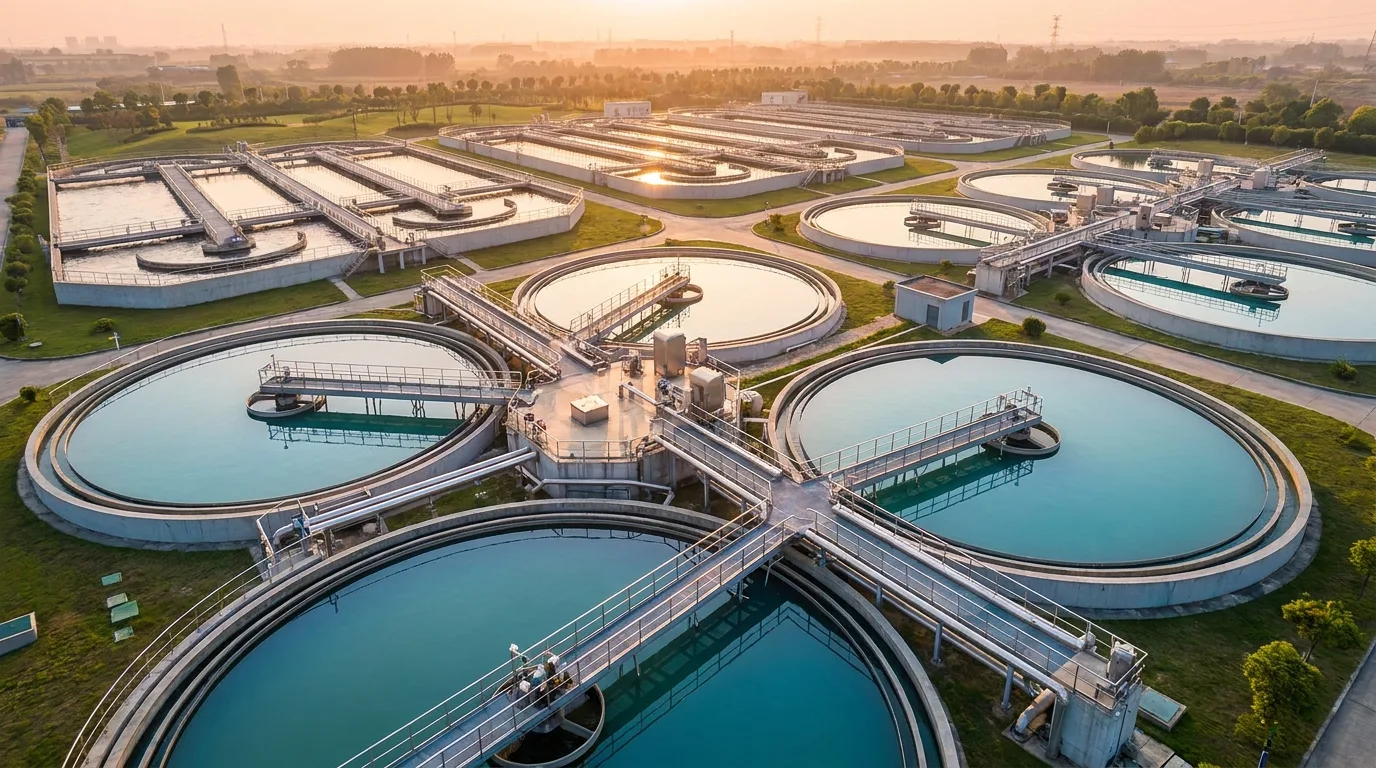
Severn Trent Water opened the UK's first operational carbon-neutral wastewater treatment hub in April 2025. The facility removes 34,000 tonnes of carbon per year, a 73 percent reduction against baseline. How? Not by building new infrastructure alongside the old. By redesigning the treatment train itself. Photocatalytic biosolids covers generate power. Integrated aeration optimization cuts energy intensity by 24 percent. Pressurised conveying systems capture energy normally dissipated as heat. The result is not just compliance. It is revenue-neutral operation.
In June 2026, Scottish Water went live with a pilot deployment of in-pipe hydropower at Glasgow wastewater treatment works. The system sits within existing inter-process water flows and converts kinetic energy into electricity. No new civil works. No infrastructure disruption. The facility is generating 8,900 kWh per year from flows that would otherwise be dissipated. That is equivalent to powering 1,200 homes or cutting that site's net energy demand by 3 to 5 percent.
Both utilities are now reporting operational proof. Both are recruiting additional sites into the programme. Both utilities' investors are watching closely. The pattern is clear. Compliance and energy recovery are not competing objectives. They are the same infrastructure decision, viewed from two angles.
Why phosphorus compliance is energy infrastructure
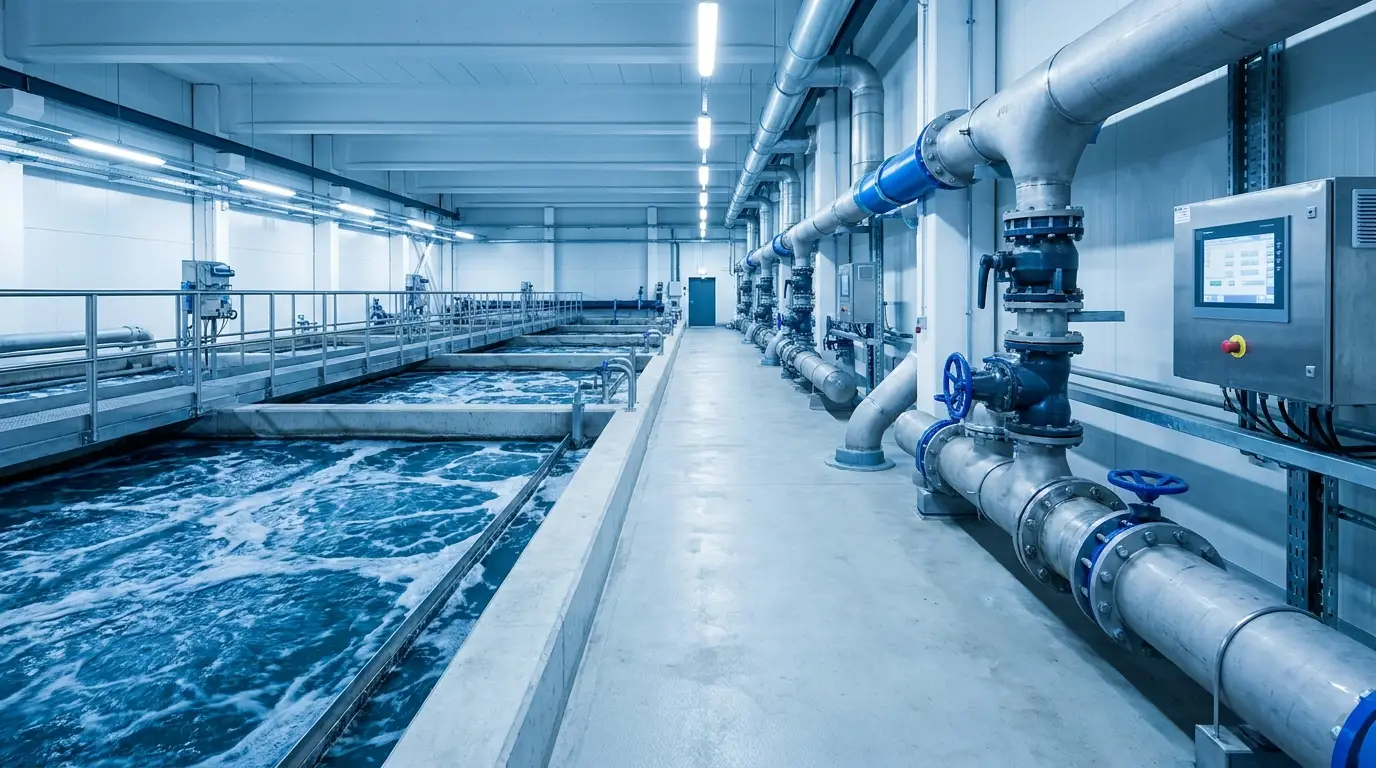
To understand why, you need to see what phosphorus removal actually requires. Conventional biological treatment is energy-intensive because it relies on vigorous aeration. When you upgrade to enhanced phosphorus removal, you either add chemical dosing, intensify the biological process, or restructure the treatment train to separate high-energy stages from low-energy stages, then recover energy from the pressure, flow, and thermal differences between them.
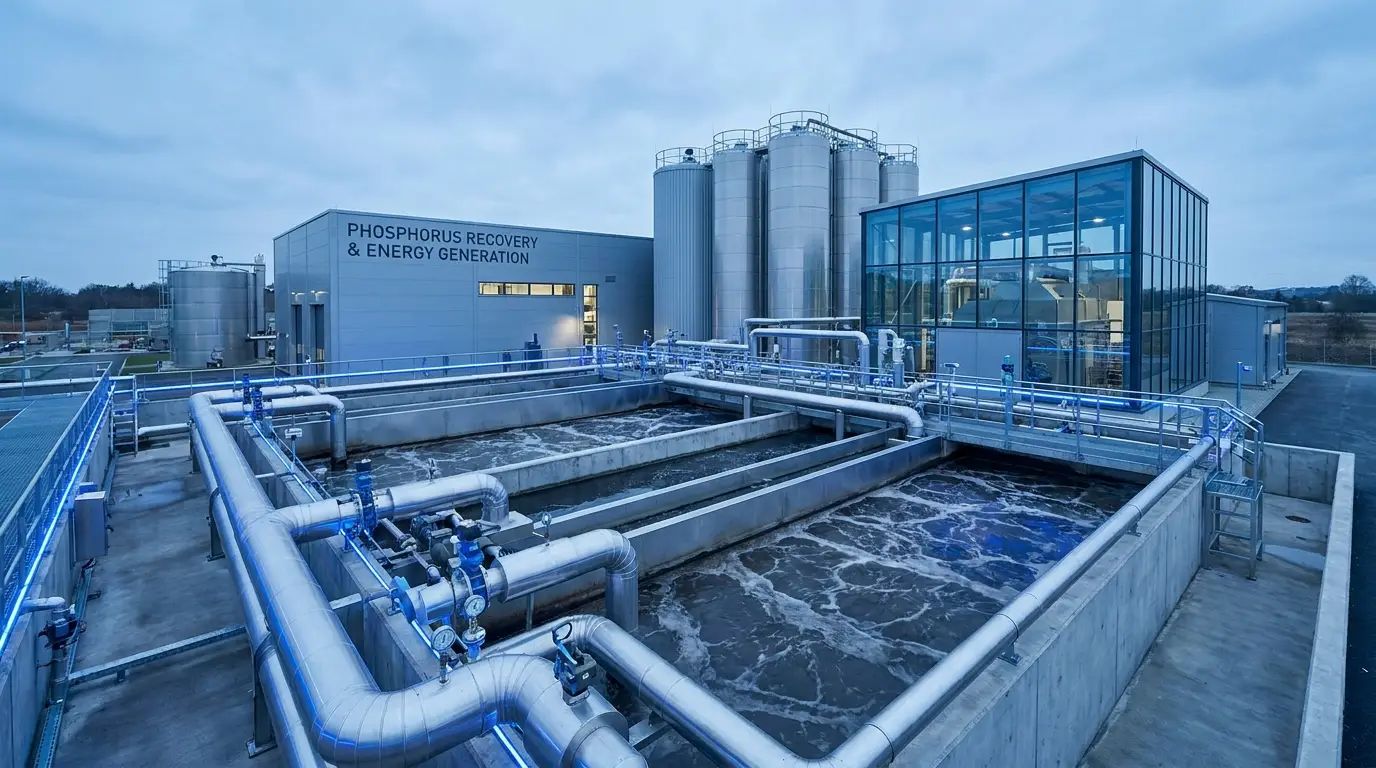
Option 3 is what the winning operators are doing. It is not elegant because biology and hydraulics are messy. But it is complete. You solve phosphorus compliance, reduce energy intensity, and create energy recovery opportunities simultaneously. Conveying systems that move biosolids now sit under pressure, where otherwise-wasted kinetic energy can be captured. Inter-process flows now pass through energy recovery turbines before returning to the process. Aeration basins are redesigned for plug-flow instead of complete-mix, cutting aeration demand by 20 to 30 percent while improving treatment.
All of this costs money. But the money is already allocated. It is the AMP8 capex budget for phosphorus compliance. The utilities winning are not spending more. They are spending differently.
Why most utilities have not yet moved
If this is so obvious, why is only a handful of operators pursuing it? Three reasons. First, phosphorus compliance and net zero energy are managed by different teams under different funding streams. Compliance teams report to regulators. Energy teams report to asset and carbon leads. Capital allocation happens separately. Until those teams are forced to reconcile priorities, spending happens in silos.
Second, proven integrated designs exist. But a utility cannot copy another utility's design wholesale. Each treatment works has different flow regimes, head availability, existing pipe layouts, local constraints, and downstream infrastructure. Designing integrated phosphorus-and-energy infrastructure for a specific site requires specialist input, extended feasibility study, and pilot validation. Utilities are risk-averse (correctly—a wastewater plant failure harms public health), so adoption is methodical.
Third, budget certainty is recent. The AMP8 framework and the January 2026 Water White Paper locked in the £104 billion investment and the 2028/2030 deadlines. Utilities can now argue to investors that integrated compliance-and-energy projects are a requirement, not a discretionary upgrade.
What this means for Operations Directors right now
If you are an Operations Director or Plant Manager at a water utility, your next three years are the most critical in treatment infrastructure since the 1970s. The 2028 phosphorus deadline is fixed. The 2030 net zero commitment is board-level. AMP8 capex is allocated. The question is not whether to comply. It is how to design compliance so it solves multiple problems at once.
That means involving your Engineering team, your Energy team, and your Compliance team in the same feasibility study. It means assessing your site's energy recovery potential as part of your phosphorus upgrade business case, not as an afterthought. Three proven utilities are already ahead. The pace of adoption is accelerating. The deadline is here.