










Skip to content
HES.
Contact Us
Solutions
Clean WaterControl pathogens, biofilm and cost where conventional treatment failsAir & Infection ControlReduce airborne pathogens and infection risk, with no ozoneEnergyCut energy and recover it from the systems you already runAgriculture & SoilUse less water and fertiliser while protecting yield and soil
Sectors
Healthcare & HospitalsKeep patients safe and your accreditation secure, with infection, Legionella and AMR risk reducedWater & WastewaterStay in consent, and cut the energy and chemicals it takes to get thereCommercial & FacilitiesMeet your EPC and disclosure obligations while running cost and carbon fallAgriculture & Urban FarmingProtect your yield and soil while using less water and fertiliserPoultry FarmingProve you control the water your birds drink, with biofilm and pathogens cleared and the evidence in handLocal AuthoritiesMove your estate towards net zero with compliant assets, funded to saveEmerging MarketsBuild investable, accreditation-ready infrastructure on reliable water, sanitation and powerHotels, Hospitality & LeisureKeep guests safe and pools open, with Legionella risk controlled and pool-hall cost cutData CentresCut the cost and water your cooling burns, and harden Legionella control, without touching uptimeFood & Beverage ProcessingCut your trade-effluent bill and hold consent, without touching food safety or uptime
Tools
Ask HESCase StudiesInsightsAbout
Contact Us
Poultry

Biofilm in poultry drinking lines: the risk hiding in the water

6 min read

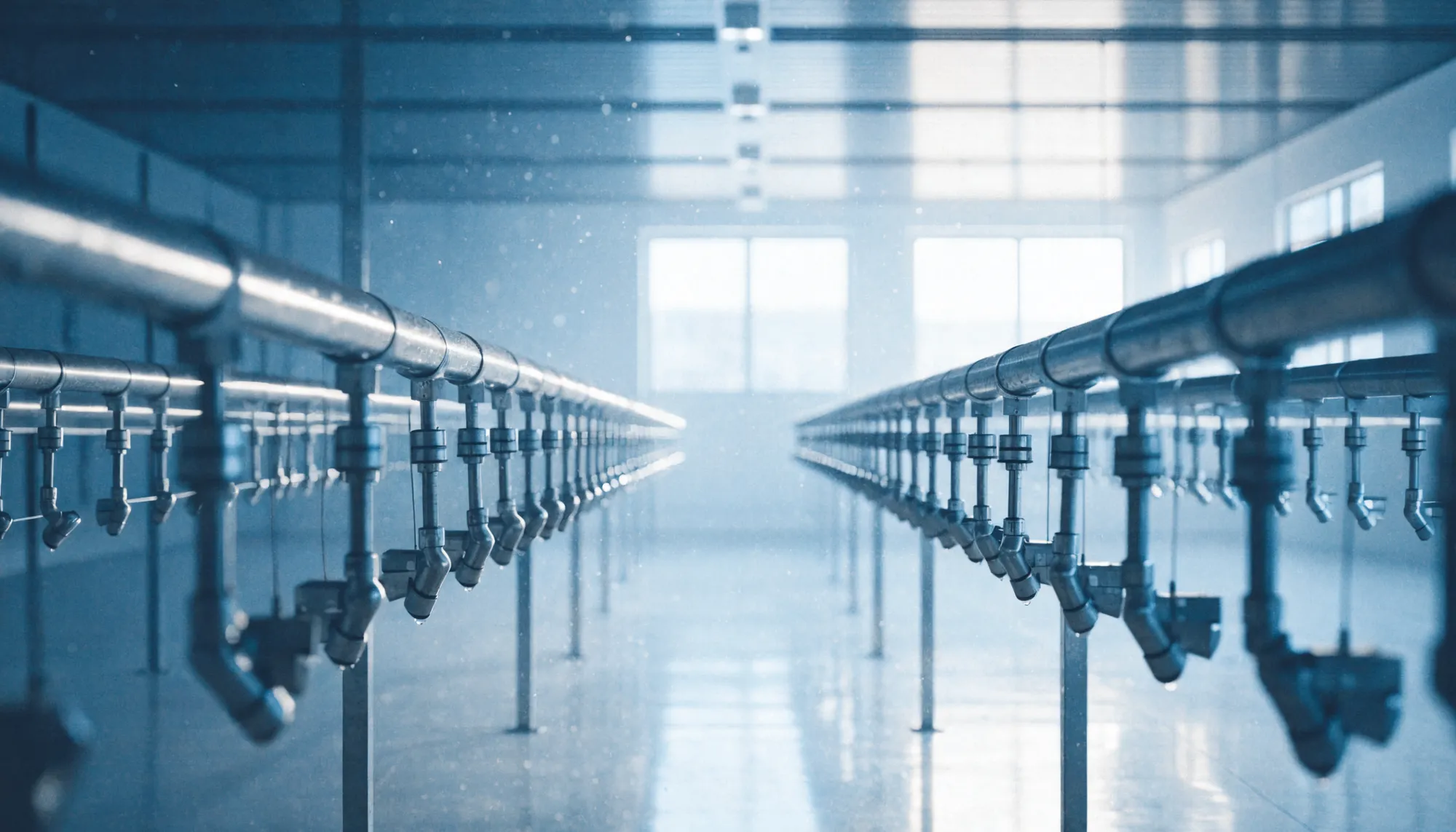
The biggest controllable water risk on a poultry unit is not in the tank, it is on the inside of the pipes. Biofilm in the drinking lines shelters waterborne pathogens, suppresses how much your birds drink, and quietly defeats the sanitiser you are already dosing. Clearing it, and proving it is clear, is one of the few high-risk points you can bring under control quickly.

Why is biofilm in poultry drinking lines such a problem?

Biofilm is a protective layer that builds on the inner walls of pipes, headers and drinkers, and the warm, continuously used, often-medicated water in a poultry shed is close to ideal for growing it. Pathogens living inside biofilm are roughly a thousand times more resistant to conventional disinfectants than free-floating cells, so a sanitiser dose can knock down what is in the water and leave the reservoir in the biofilm untouched.

That reservoir does three things at once. It shelters organisms behind Campylobacter and Salmonella exposure, it sloughs back into the water the birds drink, and it physically narrows and fouls the lines. The result is a water system that looks dosed but is not clean.

How does dirty water reach the flock and the food chain?

Drinking water is one of the most direct routes a pathogen has to every bird in the house, because every bird uses it, all day. If biofilm is seeding the lines, the flock is drinking from the contamination, not around it.

That matters well beyond the shed. Waterborne exposure to Campylobacter and Salmonella is a food-safety and assurance-scheme concern, and it is one of the recurring reasons reactive medication gets reached for. Clean water does not solve flock health on its own, but dirty water makes every other control work harder.

What does biofilm in the water actually cost a unit?

The first cost is performance. Birds drink less from fouled, off-tasting lines, and water intake is the single biggest driver of feed intake, growth and flock uniformity. Suppressed intake is margin lost quietly, across the whole house.

The second is risk and obligation. A biosecurity or food-safety failure traced to water is an assurance-scheme and reputational event, and it lands in a sector already under intense environmental and regulatory scrutiny. The third is the standing cost of dosing a system that keeps reseeding itself, more chemistry chasing a problem the chemistry cannot reach.

How do you clear it, and prove it is clear?

The answer is to go after the biofilm itself rather than chasing the water with ever larger doses, and then to verify the result with an independent laboratory rather than assume it. Done that way the system needs less chemistry, not more, to stay clean, and you hold evidence you can put in front of an inspector or auditor.

It is achievable, including where conventional chemistry has already failed. At one major UK site, a recurring pathogen problem was brought from 600 to 0 cfu/g in four days, confirmed by a UKAS-accredited laboratory, and held on a routine maintenance dose. At a private estate, 1.6 million litres were treated using a fraction of the previous chemical volume, clearing the biofilm and returning zero Legionella, E. coli and coliforms, verified by a water-authority laboratory. Those sites are not poultry units, but the mechanism is the one a poultry water system needs: clear the biofilm, hold the system pathogen-free, and prove it independently.

Questions answered

Frequently asked

Why does dosing the water not fix biofilm?

Because pathogens inside biofilm are roughly a thousand times more resistant to conventional disinfectants than free-floating cells. A dose that clears the water column can leave the biofilm reservoir on the pipe walls intact, and it reseeds the water, so the problem returns.

How does biofilm in the lines affect bird performance?

It suppresses water intake from fouled, off-tasting lines, and water intake drives feed intake, growth and flock uniformity. It also shelters waterborne pathogens, adding biosecurity and food-safety risk on top of the performance loss.

Can biofilm be cleared without disrupting the flock?

Yes. An approach that targets biofilm at source can retrofit into existing dosing lines with no rebuild and no downtime, and uses less chemistry rather than more once the biofilm is cleared.

How is the result proven for an assurance scheme?

By independent laboratory testing. Examples in our evidence base were confirmed by a UKAS-accredited laboratory and by a water-authority laboratory, including a system brought from 600 to 0 cfu/g in four days and a 1.6 million litre system returned to zero Legionella, E. coli and coliforms.

Speak to the Team

Carrying the duty for a poultry water system?

See what your drinking lines are actually carrying, and the evidence you would hold once they are clean.

See poultry water solutions