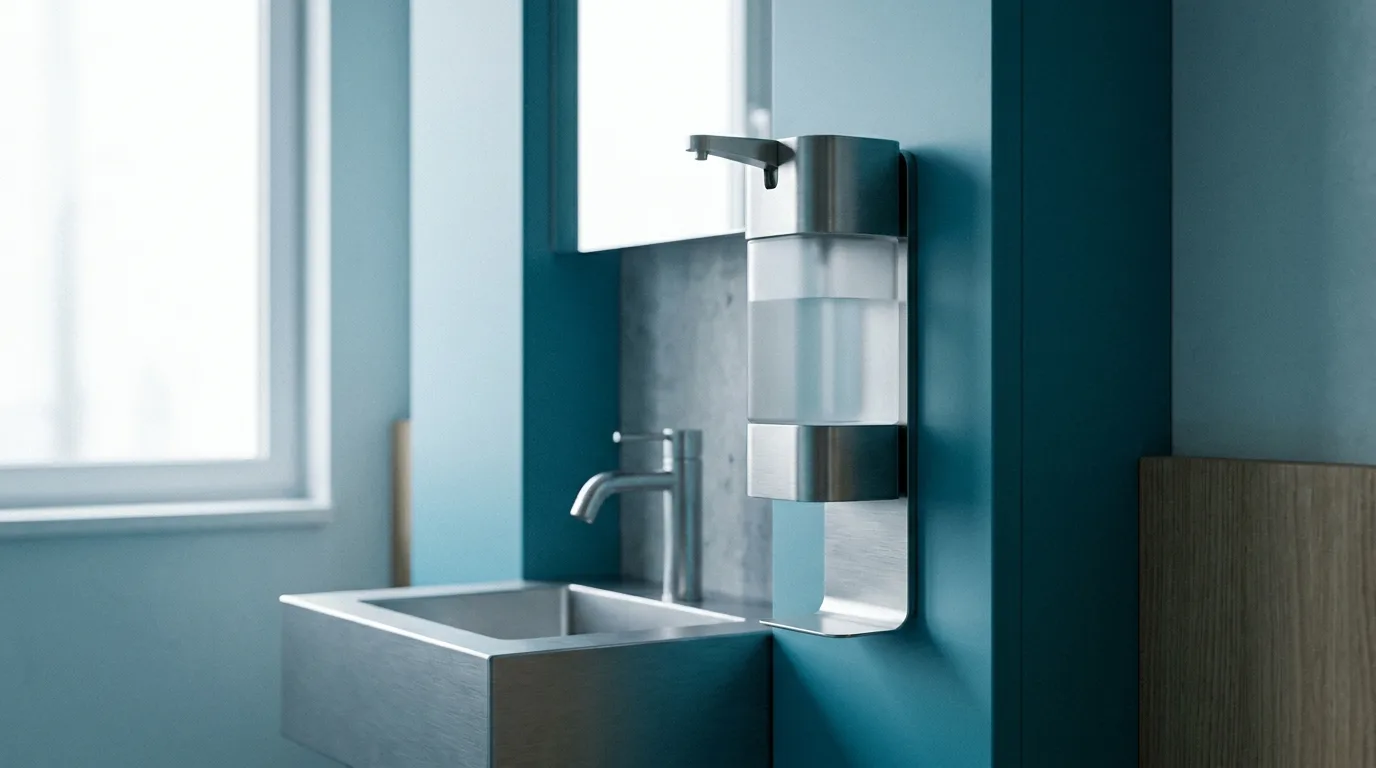
Alcohol-free hand sanitiser for where alcohol gel is a liability.
Effective against the pathogens alcohol gel misses, including C. difficile and norovirus, and free of the ingestion, fire and contraband risks alcohol brings to the settings that need hygiene most.
We give you alcohol-free hand sanitiser that is independently tested to and passes the recognised European standards, including the sporicidal and virucidal standards that cover C. difficile and norovirus, with none of the alcohol hazards. For every environment where alcohol-based sanitiser is a liability.
Independently tested to and passes the recognised hygiene standards alcohol gel cannot meet, including the sporicidal and virucidal standards for C. difficile and norovirus.
In short
What is alcohol-free hand sanitiser?
Alcohol-free hand sanitiser is a hand-hygiene product that disinfects without alcohol, so it carries no ingestion, fire or contraband risk. The right one is independently tested to and passes the recognised European hygiene standards, including the sporicidal and virucidal standards covering C. difficile and norovirus, the pathogens alcohol gel misses.
Settings where alcohol-based products are restricted, prohibited or a documented liability
Covering the pathogens alcohol gel misses, including C. difficile and norovirus
Removing the ingestion and intoxication risk that closes wards and custody
Taking a flammable liquid out of secure, supervised and high-occupancy buildings
Gentle enough for the constant, repeated hand hygiene these settings demand
Evidence against named recognised standards to put in front of an inspector
The problem we solve
The default hand sanitiser is both a liability and a gap
Alcohol gel is the clinical default, but in alcohol-restricted environments the regulator has flagged it as a danger, and everywhere it leaves the pathogens that close wards, homes and classrooms untouched.
Alcohol-based hand gel is a documented poisoning and ingestion hazard. UK enquiries to the National Poisons Information Service about hand sanitiser rose sharply over a single year, and coroners' reports record deaths from ingestion in confused and detained people. NHS England now requires alcohol gel to be stored securely on mental-health wards as a direct result.
It is also a highly flammable liquid that carries fire, self-harm and contraband risk into secure and supervised settings. That is why UKHSA restricts wall-mounted alcohol rub in prisons, and why estates teams must risk-assess it under COSHH and DSEAR before it goes on a wall.
And it leaves a gap. Alcohol gel does not kill norovirus, the pathogen that most often closes wards, homes and classrooms, and it has no activity against C. difficile spores. The official advice when these are circulating is to fall back to soap and water. The everyday tool is not covering the everyday threat.
How it works
Covers what alcohol misses, with the hazard designed out
You get both at once: broad-spectrum protection that covers the pathogens alcohol leaves behind, and an alcohol-free formulation that removes the ingestion, fire and contraband risk.
Alcohol-free hand sanitiser of this grade is independently tested to and passes the recognised European hygiene standards, including the sporicidal and virucidal standards that cover C. difficile and norovirus, the pathogens alcohol gel does not touch. So it closes the spectrum gap rather than living with it.
And because there is no alcohol, there is no ingestion-toxicity pathway, no flammability and no contraband concern, the exact failure modes that make alcohol gel unsafe in mental-health, custodial, care and education settings. It is gentle enough for the constant, repeated hand hygiene these settings demand, so it supports compliance. It complements soap and water where hands are visibly soiled, in line with national infection-control guidance. One accountable partner specifies it for your setting and stands behind the evidence.
What it delivers
Hand hygiene that covers the gaps and removes the hazard
Risk
Cover the gaps alcohol leaves
Broad-spectrum protection, independently tested to and passing the sporicidal and virucidal standards for C. difficile and norovirus, the pathogens alcohol gel cannot touch.
Risk
Remove the ingestion hazard
No alcohol means no ingestion-toxicity or intoxication pathway, the documented danger that led NHS England to mandate secured gel storage on mental-health wards.
Risk
Take a flammable liquid out of the building
Alcohol-free and non-flammable, so it removes a highly flammable substance from secure, supervised and high-occupancy settings, and simplifies your COSHH and DSEAR position.
Obligation
Hand hygiene where alcohol is restricted
An option for the wards, wings, homes and classrooms where alcohol-based products are restricted or prohibited, so you can sustain hand hygiene without carrying the hazard.
Risk
Gentle enough for constant use
Kind to skin for hand hygiene done dozens of times a day, supporting compliance and reducing the occupational dermatitis that frequent alcohol use drives.
Obligation
Evidence for inspection
Independently tested results, against named recognised standards, to put in front of an inspector and into your assurance file.
Evidence
Tested, and proven to standard
Independently tested to and passing the standards alcohol cannot meet.
Broad-spectrumIndependently tested to and passes the recognised European standards, including the sporicidal and virucidal standards for C. difficile and norovirus
Alcohol-freeNo ingestion, flammability or contraband hazard, by formulation rather than by mitigation
Skin-kindDesigned for the constant, repeated hand hygiene these settings demand, without the cumulative damage of alcohol
The evidence
Why the default is the wrong tool here
Mental health
The regulator flagged alcohol gel as a ward hazard
After recorded harm from ingesting alcohol-based hand gel, NHS England updated the PLACE audit to require gel to be stored securely on mental-health wards. The standard hygiene tool had become a patient-safety risk.
Custody
Alcohol rub restricted in prisons
UKHSA infection-control guidance for adult prisons restricts wall-mounted alcohol hand rub because dispensers carry a risk of ingestion and unintended use, leaving a confined, high-transmission estate short of its primary hygiene tool.
Care and schools
It misses the pathogen that closes the building
UKHSA advises that alcohol gel does not kill norovirus, the dominant winter threat in care homes and schools, and the official fallback is soap and water. The spectrum gap is documented, not theoretical.
Before you commit
Does it work, is it safe, is it proven
Three fair questions from any infection-control or estates team, with straight answers to all three.
It is independently tested to and passes the recognised European hygiene standards, including the sporicidal and virucidal standards that cover C. difficile and norovirus, so it closes the gap alcohol gel leaves rather than matching it. It is alcohol-free, so it removes the ingestion, fire and contraband hazards the regulator has flagged. We start with a trial in one setting, ward, wing, home or site, and prove the fit in your own environment. Soap and water remains the standard for visibly soiled hands, as it should.
Independently tested, alcohol-free, and proven against the standards alcohol gel cannot meet.
Questions answered
What is alcohol-free hand sanitiser?
It is a hand-hygiene product that disinfects without alcohol, so it carries no ingestion, fire or contraband risk. The grade we specify is independently tested to and passes the recognised European hygiene standards, including the sporicidal and virucidal standards covering C. difficile and norovirus.
Is alcohol-free hand sanitiser effective?
The right one is. It is independently tested to and passes the recognised European hygiene standards, including the sporicidal and virucidal standards that cover C. difficile and norovirus. It closes the spectrum gap alcohol gel leaves, rather than matching it.
Where is alcohol-free hand sanitiser used or required?
In the settings where alcohol-based products are restricted, prohibited or a liability: mental-health and psychiatric wards, prisons and custody, social care around vulnerable residents, and schools and SEND settings. It lets these settings sustain hand hygiene without carrying the alcohol hazard.
Alcohol-free hand sanitiser or alcohol gel: which is better?
It depends on the setting. In most clinical settings alcohol gel is fine. In alcohol-restricted environments it is a documented hazard, a poisoning and ingestion risk, a flammable liquid and a contraband concern, and it still does not kill norovirus or C. difficile spores. Alcohol-free hand sanitiser is for exactly those settings, and it covers that gap.
Is alcohol-free hand sanitiser safe for skin?
Yes. It is designed for the very high-frequency hand hygiene these settings demand, and being alcohol-free it avoids the cumulative skin damage that frequent alcohol gel use causes and that erodes compliance.
Does alcohol-free hand sanitiser replace soap and water?
No. National infection-control guidance is clear that soap and water is used when hands are visibly soiled or when caring for people with diarrhoea and vomiting. Alcohol-free hand sanitiser complements that standard, it does not override it.
Is alcohol-free hand sanitiser suitable for sensitive settings?
Yes, that is what it is built for. It removes the ingestion, intoxication and flammability concerns that make alcohol-based products unsafe around vulnerable, confused or detained people, and it is gentle enough for constant use, so it suits mental-health, custodial, care and education environments.
Tell us where alcohol-based sanitiser is letting you down on safety, fire risk or spectrum. We will set up a trial in one setting and prove the fit in your own environment.